In remembrance

Prof. Shivaram Malavalli

Known in his spiritual work as ShivYogi

A technology-incubation pioneer, mentor, spiritual seeker, and Srividya sādhaka whose professional work helped people build enterprises and whose inner life found expression in Nādabindu.

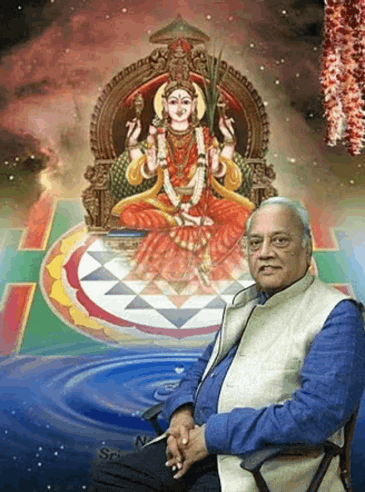
Portrait of Prof. Shivaram Malavalli seated before an image of Sri Bhuvaneshwari

A life in two movements

Builder of institutions. Seeker of the inner path.

Prof. Shivaram Malavalli’s public life joined enterprise development, education, healthcare innovation, and international collaboration. The San Francisco - Bangalore Sister City Initiative describes him as an architect of the country’s first Science & Technology Entrepreneurs Park and records the national recognition earned by the SJCE-STEP ecosystem in Mysuru.

The devotional archive preserved here holds another dimension of that life. As ShivYogi, he wrote and conceptualised the Nādabindu songs from his Srividya practice, with the blessings of his Guru Swami Rāma and the grace of Sri Bhuvaneshwari.

Life and work

A legacy of building, mentoring, and practice

Enterprise ecosystem

Architect of SJCE-STEP

He helped establish, sustain, and grow the Science & Technology Entrepreneurs Park at SJCE in Mysuru. Public profiles credit the park with receiving national recognition from the Department of Science & Technology as the country’s best STEP.

Mentorship

A steady guide for founders

An Economic Times profile described him as the architect of India’s first STEP and noted that he had nurtured more than 200 entrepreneurs. ISBA’s remembrance honours the human-centred mentor behind the institutions.

International work

Connecting local ideas to the world

His work carried Indian incubation practice into international forums and collaborations, including UNESCAP, Silicon Valley, Malaysia, and Thailand. He also served the San Francisco - Bangalore Sister City Initiative.

Spiritual practice

Disciple, sādhaka, and writer

His memoir records his bond with Swami Rāma and the path that led him deeper into Srividya, Agnihotra, and Patanjali’s Ashtānga Yoga. The Nādabindu compositions grew from that practice.

The thread that continues

Ideas became institutions. Practice became song.

This museum gathers the forms his work took: the albums he conceived, the spiritual memoir he wrote, the Guru he revered, the library he read, and the discussions he left for fellow travellers.

Public references

Sources and further reading

Public references consulted for this biography on 1 June 2026. The devotional context is also preserved throughout this museum.